What the Ceiling Is Saying: A Week of Grocery Shopping by Ear
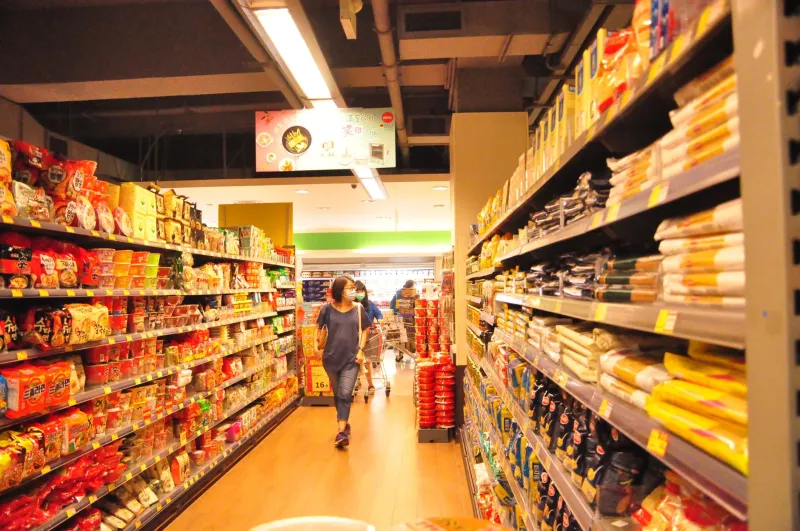
The first thing I noticed was not the song. It was the ceiling. Somewhere above the dairy case, a speaker was doing a job I had never really assigned it: setting a room's temperature without touching the thermostat. I stood by the eggs with a hand basket and listened. The track was soft, mid-tempo, vaguely familiar in the way a hotel lobby is familiar. And for the first time in years, I wondered who chose it.
So I spent a week shopping by ear. Not changing what I bought, not timing my trips for science, just carrying a notes app and a cheap decibel meter and paying attention at three kinds of US grocery stores: a large chain, a neighborhood market, and a specialty grocer. I went in the morning, the afternoon, and the evening. I wrote down genre, rough tempo, volume, and the places where the sound changed. This is not a study. It is a listening practice.
The Rules of the Experiment
I kept the rules simple. At the entrance, I stood still for thirty seconds and noted what I heard before I grabbed a cart. In each store, I walked one full aisle at my normal pace and then one more at a deliberately slower pace. At checkout, I listened again. I also noted the non-music sounds: refrigeration hum, register beeps, carts with bad wheels, the announcement about a missing child or a sample in aisle nine. Those sounds matter because the playlist is never alone.
What surprised me was how often the music changed character without changing volume. A store can move from bright pop to mellow covers and still sit at the same background level. The mood shifts, but the room does not announce it. You feel it in your shoulders before you name it.
Morning: Slow Enough to Think
The morning trips were the easiest to read. Between eight and ten, the big chain played soft pop and light jazz, mostly in the seventy-to-ninety beat-per-minute range. The volume was low enough that I could hear the dairy case humming and a produce worker stacking apples. The store was half empty. Carts moved slowly. A man in a fleece jacket read the back of a cereal box for a long time. A toddler in a cart seat pointed at the ceiling and said, "Music."
I did not feel rushed. I also did not feel especially energized. The morning soundtrack seemed designed to keep the room calm rather than push it forward. That makes sense. Morning shoppers are often on a different kind of errand: retirees, parents before school pickup, people buying one rotisserie chicken and a bag of salad. The music met them where they were.
The neighborhood market was even quieter. It played old standards and acoustic covers, with long gaps between songs. In the produce section, the only consistent sound was the misting machine. I found myself standing in front of the peppers longer than I needed to. Not because the music told me to buy peppers. Because the room had no edges. It was easy to stay.
Afternoon: The Tempo Nudges
The afternoon was different. Around two, the big chain's playlist brightened. More indie pop, more country-pop, a few songs with handclaps. The tempo climbed into the one-hundred-to-one-hundred-twenty range. The volume went up a notch, or maybe the store simply had more bodies to absorb it. Either way, the room felt more awake.
I caught myself walking to the beat. That is the obvious observation, and I do not want to overstate it. I was not a puppet. I was a person with a list, and the list had milk, tortillas, and a lemon. But when a song with a steady kick came on, my cart moved faster. When a ballad followed, I slowed down near the frozen vegetables. The music did not decide my route. It colored the pace.
At the specialty grocer, the afternoon playlist was more curated: bossa nova, soft funk, a French pop song I did not recognize. The volume was slightly higher near the entrance and dropped in the back aisle by the cheese counter. That was the first store where I noticed a real acoustic map. The ceiling speakers did not cover the room evenly. There were pockets. A shopper in the back corner was in a quieter room than a shopper at the front.
Evening: The Volume Drops, Then Doesn't
The evening trips were the most interesting. Around seven, the big chain shifted to mellow pop and slowed-down covers. The tempo dropped, but the volume did not always follow. At one store, the music stayed at the same level while the playlist became more atmospheric. At another, the volume dipped after eight, as if the room were being turned down one degree at a time. Employees were restocking shelves. A floor cleaner hummed past the freezer aisle. The music was still there, but it had moved to the background of the background.
I asked a cashier at the neighborhood market whether she noticed the playlist changing during her shift. She laughed. "By the end of the night, it's all soft rock," she said. "You stop hearing it. Then a song comes on that you hate, and you hear every word."
That seemed like the most honest review of grocery-store music I could get. The people who work inside the playlist do not experience it as a mood-setting tool. They experience it as a clock. The songs mark the hours. The repeats mark the length of a shift.
Where the Playlist Changes
I started paying attention to boundaries. At the entrance, the music was usually loudest. Near the checkout, it was often a little clearer because there were fewer shelves to absorb it. In the center aisles, the sound got muddy. The frozen section had its own low hum. The back aisle near the loading door had a dead spot where the ceiling speaker gave up.
These are not grand design choices. They are the ordinary result of putting speakers in a big box and filling it with food. But they create neighborhoods. There is a loud room at the front, a quiet room in the back, and a strange transitional zone by the bread. Once you notice it, the store stops feeling like one continuous space. It becomes a series of small acoustic rooms with different rules.
What the Music Is Not Doing
It is tempting to turn this into a conspiracy. The playlist is not hypnotizing you into buying more crackers. Most of the time, it is doing several unglamorous jobs at once: masking the sound of refrigeration, filling silence, giving the store a brand mood, and keeping the room from feeling like a warehouse. It is also a workplace soundtrack. Someone has to hear "Walking on Sunshine" forty times a week so you can buy yogurt.
That does not mean the music has no effect. It means the effect is subtle and mixed up with everything else: lighting, layout, signage, the smell of the bakery, the length of the checkout line. The soundtrack is one quiet instrument in a room that is already playing several songs at once.
A Simple Way to Hear It
The next time you shop, try this. Before you grab a cart, stand still for thirty seconds. Listen for the tempo. Listen for the volume. Ask yourself whether the song is trying to wake you up or slow you down. Then walk one aisle at your normal pace. Notice if your cart speeds up or slows down. At checkout, listen again. You do not have to change your behavior. You just have to hear the room as a room.
I left the week with a new habit: I look up at the ceiling when I walk into a grocery store. Not because I expect a revelation. Because the ceiling is where the store keeps one of its quietest design choices. The music is not the whole story. But once you hear it, the supermarket stops being just a place to buy milk. It becomes a place with a soundtrack, a tempo, and a very large refrigerator humming underneath it all.