The Last Two Minutes Are the Door: A Week of Podcast Goodbyes
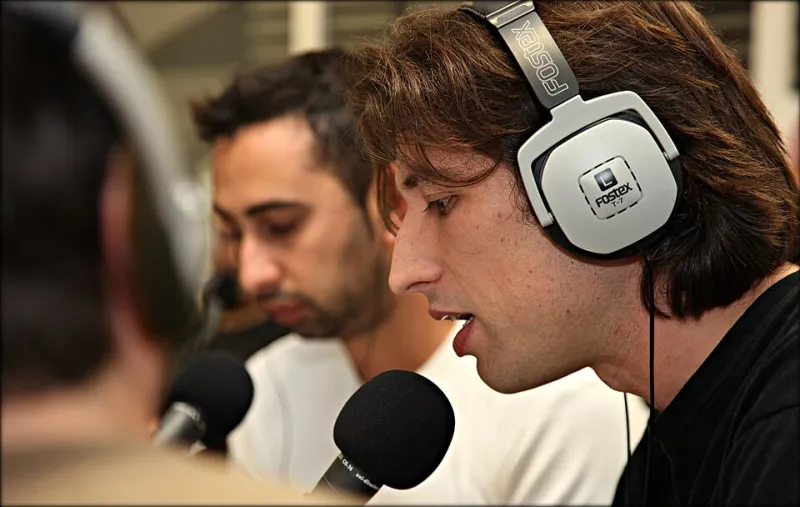
Photo: David Martín :: Suki_ ::, CC BY-SA 2.0, via Wikimedia Commons
Most podcasts are built around the middle. The interview, the story, the argument, the long stretch where the host earns your attention. But the last two minutes are where the show stops being a show and starts being a guest in your day. I spent a week listening only to those final two minutes—the goodbye, the ad read, the music bed, the abrupt cut—to see how different hosts hand a listener back to the room.
The method was simple and slightly strange. I queued up a dozen shows I already trust, skipped to roughly two minutes remaining, and listened. No context. No buildup. Just the landing. Some outros felt like a warm porch light left on. Others felt like a receipt being printed. A few felt like someone backing out of the driveway before the conversation had really finished.
The Handoff Is the Product
We tend to think of a podcast outro as cleanup: credits, plugs, a reminder to subscribe. But it is closer to architecture. It is the threshold between the show’s world and your kitchen counter. A good one does not just end the audio file; it changes the temperature of the room.
The best outros I heard shared a quiet confidence. They did not rush. They named the show, thanked the guest, and gave one clear next step. Sometimes that step was an ad. Sometimes it was a request to rate the show. Sometimes it was just a line like, see you next week. The wording mattered less than the pacing. The host sounded like someone who knew the listener had a life waiting on the other side of the headphones.
Ads, Credits, and the Sound of Trust
The ad read is the most honest part of many outros. It is where the show’s voice either holds or slips. A host who reads a sponsor spot in the same rhythm as the rest of the episode makes the transition feel native. A host who sounds like they are reading a parking ticket makes the last two minutes feel like a toll booth.
I noticed that my trust did not depend on whether the ad was there. It depended on whether the host seemed to respect my time while it was there. The good reads were short, clear, and placed after a small pause—a breath that said, okay, one more thing before we part. The less good ones stacked three calls to action, a promo code, and a second sponsor in the space where a simple goodbye would have done.
That is the design lesson: the outro is not a junk drawer. It is a sequence. Order matters. A thank-you before an ad feels different from an ad before a thank-you. A music bed under a credit roll feels generous. A music bed under a hard sell feels like a movie theater playing commercials after the credits have already started.
A Music Bed Is a Curb
Music in the final two minutes works like a curb. It does not stop the car; it tells the driver where the street ends. A low, steady bed can soften a host’s voice and make the exit feel intentional. A sudden swell can feel like a nudge out the door. Silence can be even more powerful, especially when the host lets a final sentence sit for a second before signing off.
One show I listened to ended with eight seconds of room tone and a single piano note. It was almost nothing. But it made the goodbye feel like a held door. Another show cut to a loud jingle the instant the host said thanks. It was not offensive, exactly. It was just jarring—like a friend ending a hug with a high-five.
The Abrupt Cut and the Polite Fade
There is a special kind of trust required for an abrupt cut. Some hosts end mid-breath, as if the show is a live radio broadcast and the clock has run out. When it works, it feels honest and a little thrilling. When it does not, it feels like the file was trimmed with garden shears.
The polite fade is safer. It gives the listener a ramp. But too much fade can feel like the host is tiptoeing away, unsure whether they are allowed to leave. The sweet spot, I decided, is a clear sign-off followed by a short runway. Enough time to lift your phone, close the app, and rejoin the room without feeling yanked.
What I Learned About My Own Attention
By the end of the week, I realized I had been using outros as background noise. I would let them play while I checked email or rinsed a coffee mug. Listening only to the final two minutes made me notice how often I missed the actual handoff. The host said something kind, or useful, or funny, and I was already gone.
That is not a failure of the shows. It is a failure of mine. The outro is a small courtesy, and courtesies are easy to ignore when you are in a hurry. But the week also made me appreciate the hosts who build those last two minutes with care. They are not just filling time. They are closing a loop.
A Better Goodbye Is a Small Courtesy
The outro will never be the reason most people press play. It is not the hook, the story, or the guest. But it is the part that decides how the show sits with you afterward. A good ending does not need to be elaborate. It needs to be clear, calm, and aware that the listener has a doorway to walk through.
After a week of listening to nothing but goodbyes, I have a new test for the shows I love. I do not ask whether the first five minutes grab me. I ask whether the last two minutes let me go. The ones that do are the ones I come back to.