The Shelf Has an End: Notes From the Library DVD Section
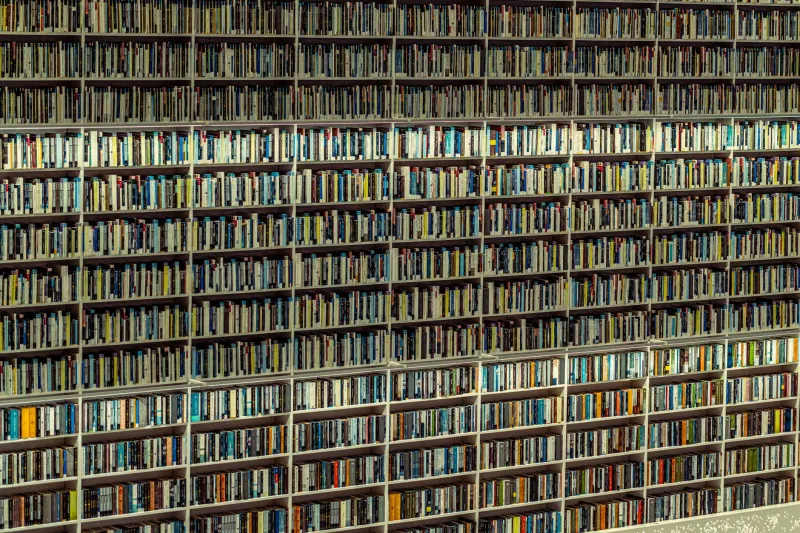
Every public library I've ever loved has the same corner. It's past the fiction stacks, usually near the periodicals, lit by the slightly harsher fluorescent fixture nobody replaced. There's a low shelf of DVDs in plastic cases with laminated spine labels, and a handwritten index card taped to the end that reads something like “New arrivals — one week only.”
It is, by any honest measure, a small collection. A few hundred titles at most, maybe a thousand if your system is generous. And it has done more for my movie life in the last two years than a decade of scrolling through apps with six-figure catalogs.
Browsing is the entertainment
The great unspoken problem with streaming is that choosing has become a chore outsourced to a machine. You open the app without a plan, the app offers you a wall of suggestions based on what you watched in a bad mood in February, and you spend eleven minutes hovering before picking something you've already seen.
A DVD shelf solves this by being finite and legible. You can see the whole thing. Your eye moves left to right, you notice a spine you'd never have searched for, you flip the case over and read the back. The back of a DVD case is a nearly perfect piece of design: one image, a paragraph, a runtime, a rating, maybe a couple of critic blurbs. Everything you need to decide, and nothing engineered to keep you there.
That physical act — walking, scanning, pulling a case off the shelf — is the part I've come to think of as the actual entertainment. The choosing feels like browsing a record store rather than negotiating with a recommendation engine.
A curator with a budget and a memory
The librarians who build these sections are doing work that gets almost no credit. Ask at a reference desk and you'll hear a version of the same story: the media budget is modest, the shelf space is fixed, and every title has to earn its slot.
That constraint produces a genuinely editorial collection. Staff buy the things people ask for, the things that get taught in local film classes, the documentaries that circulate for a decade, the kids' movies that survive being watched forty times. They weed the shelf when cases stop moving. Someone, somewhere, made a judgment call about every single spine in that row.
Ask the same librarians what circulates and you'll get an education in taste. The Oscar winners come and go quickly. The odd little British mystery series gets renewed forever. Box sets of old television are checked out by the same six people, in order, for years. One librarian told me the most reliable predictor of a DVD's longevity is whether a grandparent might want to watch it with a grandchild.
Compare that to an algorithm optimizing for minutes watched. One system is trying to keep you; the other is trying to send you home happy.
The digital branch is quietly excellent
Here's the part that surprises people: your library card probably already gets you streaming. Most US public library systems offer services like Kanopy or Hoopla, which lend films and shows on a credits-per-month model. The catalogs skew toward independent cinema, documentaries, world film, and the kind of classics that vanish from commercial platforms when a licensing deal expires.
Because you get a limited number of borrows each month, the experience has an unusual shape. You think before you press play. I've watched more complete films in a month of library streaming than in a season of unlimited scrolling, purely because the credits felt like something.
Using the catalog like a person
A few practical notes if you want to try this.
Search by director, not by mood. Mood searches are what the apps are for. In a library catalog, a name gets you a filmography, and filmographies are self-curating: you'll find the lesser-known titles sitting right next to the famous ones.
Put holds on things you're not ready for. Most systems let you queue items, and the wait itself becomes a gentle reminder. A movie arriving three weeks after you asked for it has a way of being exactly what you want that night.
Check the interlibrary loan option. Small local collections usually sit inside larger regional networks. That obscure 1970s title may be one county over, and it will come to you.
Go in without a list once a month. This is the whole point. Ten minutes of shelf-scanning will teach you more about what you actually like than a year of thumbnails.
The shelf you can finish
The lesson here isn't that physical media is morally superior or that streaming is bad. It's that scale has a cost. A menu that never ends asks you to supply your own boundaries, and most of us are tired by 9 p.m.
A shelf with an end does that work for you. It says: here is what we have, here is why we have it, take one home. That's a design brief worth stealing — for apps, for playlists, for anything that wants to be enjoyed rather than consumed.