Signal, Not Menu: Seven Evenings With an Antenna and No Plan
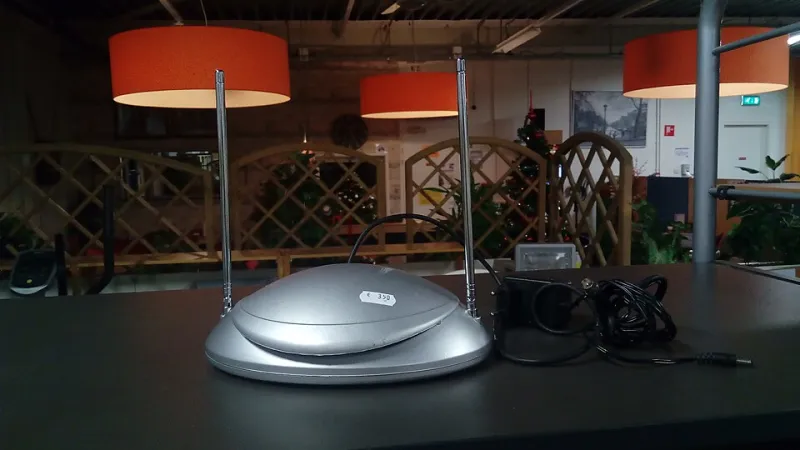
Photo: Donald Trung Quoc Don (Chữ Hán: 徵國單) - Wikimedia Commons - © CC BY-SA 4.0 International.(Want to use this image?)Original publication 📤: --Donald Trung 『徵國單』 (No Fake News 💬) (WikiProject Numismatics 💴) (Articles 📚) 19:27, 19 December 2019 (UTC), C
There is a particular sound an indoor antenna makes when you finally get it right: nothing. No chime, no confirmation. Just a channel that wasn't there a second ago, blooming out of static like a radio station found in a storm. I bought a flat antenna for about twenty-five dollars in early November, pressed it high on a window, and let the television scan for whatever was floating through the air over my neighborhood.
It found forty-one channels. Most of them I had never heard of.
For seven nights, I gave myself one rule: one hour of free over-the-air television, whatever happened to be on. No streaming apps. No menus. No browsing. The remote's channel-up button was the only search function allowed. This is not a pitch for austerity. It's a report from the other side of the thumbnail grid.
The Scan Is the Whole Decision
The first thing you notice is how quickly the ritual shrinks. With streaming, the evening begins with a kind of low-grade negotiation: what genre, what mood, what length, what service, what episode. With an antenna, the decision is already made by someone else — a program director, a syndication contract, a clock. You are not choosing a title. You are choosing to accept the signal.
That sounds passive. In practice, it felt like relief. The channel scan itself became a small ceremony: a progress bar, a count of found stations, a list of call letters and subchannel numbers. 4.1, 4.2, 7.3, 11.5. Each one a tiny door into a different room of the same city. I found local news, a weather loop, a Spanish-language station, a channel showing nothing but old game shows, and three separate feeds of the same sitcom at different points in the evening.
Appointment TV Without the Appointment
On the second night, I caught the last twenty minutes of a movie I had never heard of. It was already halfway through, which meant I had to piece together the plot from context clues: a wedding, a misunderstanding, a wisecracking neighbor. I never learned the title. I didn't need to. The pleasure was in the joining, not the completing.
That's the quiet gift of broadcast television. It refuses to wait for you. You arrive mid-scene, mid-joke, mid-credits. There is no recap, no "previously on," no gentle onboarding. You either catch up or you don't. And because you can't pause, you pay a different kind of attention — looser, more forgiving, less like homework.
The Comfort of Digital Subchannels
The real discovery was the subchannels. These are the extra feeds that local stations tuck into their signal: old movies, classic TV, court shows, cooking, science fiction, a channel that seems to exist solely for black-and-white Westerns. One night I watched a 1970s detective show with commercials for walk-in tubs and reverse mortgages. It was not good. It was perfect.
Late-night reruns have a specific texture. The pacing is slower. The laugh tracks are louder. The picture is slightly soft, as if the signal itself has been through a few decades. Watching an episode of a sitcom I'd never seen, interrupted by ads for local car dealerships, felt less like entertainment and more like sitting in a waiting room in a town I'd never visited. Pleasant, somehow. Unhurried.
What a Limited Dial Teaches
By the fourth night, I noticed I had stopped reaching for my phone during commercial breaks. There was nothing to browse, no menu to scroll. The ads became part of the hour, a built-in pause. I made tea. I looked out the window. I came back.
A limited dial does something strange to curiosity. When you have infinite choices, curiosity becomes a search problem. When you have forty channels, curiosity becomes an exercise in attention. You watch what's on, and you notice what you notice. A local history segment. A weather map. A B-movie with a surprisingly good car chase. None of it is optimized for you, which is exactly why it feels like a small vacation from being optimized.
A Small Ritual Worth Keeping
I didn't keep all seven nights. By Friday, I was tired and watched a streaming show like a normal person. But the antenna hour stayed with me in a way that felt useful. It reminded me that ease and curiosity are not opposites. Sometimes the easiest thing is to let the schedule decide, to press channel-up and see what the air has to offer.
The antenna is still taped to the window. The scan still finds forty-one channels. Most nights I don't turn it on. But once a week, I do — one hour, no menu, no plan. It is not the best television I watch. It is the most restful.