The Receipt Drawer Remembers More Than You Do
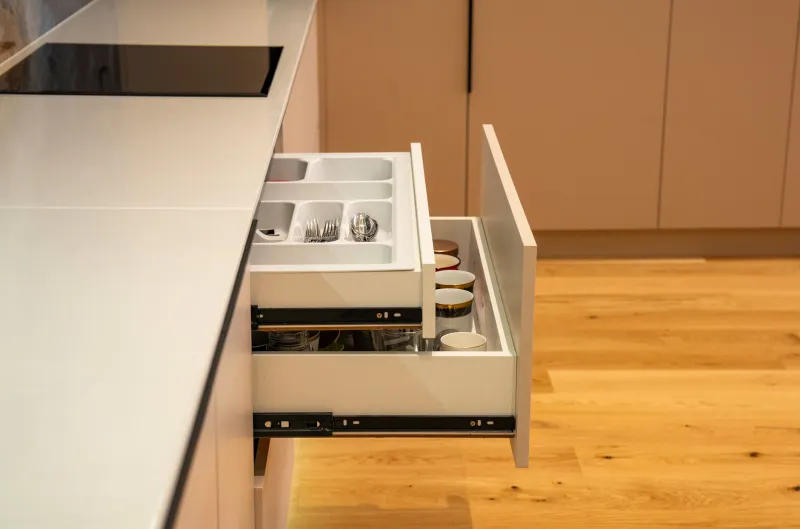
Open the drawer beside the fridge and you will find the usual suspects: a CVS receipt long enough to wrap a sandwich, a parking stub from a garage you cannot place, a takeout slip with one item circled twice, a ticket stub from a movie you liked enough to keep but not enough to frame. None of it was meant to become an archive. That is exactly why it works.
We tend to think of memory keeping as a project. Buy the album, label the tabs, write the captions, fall behind, feel bad, abandon the album. The receipt drawer asks for none of that. It is accidental, incomplete, and slightly embarrassing. It is also a surprisingly accurate record of ordinary life.
The Drawer Is Not a Scrapbook
A scrapbook is curated. Someone chose the photos, trimmed the edges, and arranged the story. The receipt drawer has no editor. It collects what came through the door: groceries, hardware, a slice of pizza after a long Tuesday, the parking receipt from a doctor's appointment. The result is less flattering than a scrapbook and more useful. It shows the texture of a week rather than the highlight reel of a year.
That is the quiet appeal. You do not have to sit down and remember. The paper remembers for you, badly but honestly. A restaurant receipt with two coffees and one pastry can bring back a morning faster than a posed photo. A hardware store slip for three hinges and a can of paint can summarize an entire weekend.
What the Paper Actually Records
Receipts are not good at big events. They are good at small evidence. The time stamp on a parking stub. The address of a shop you stopped into because it started raining. The name of a takeout place you tried once and never revisited. These details are not important in the moment. Later, they become the closest thing we have to a diary entry written by the errand itself.
Ticket stubs occupy a similar space. A movie ticket does not tell you what you thought of the film. It tells you that you went, on a specific night, probably with someone, probably after dinner. That is enough. The stub is not the memory. It is a small hook the memory can hang on.
A Shoebox Beats a Scrapbook
If you want to keep some of this, do not upgrade to a fancy system. A shoebox is better. It is cheap, forgiving, and easy to close. You can put a stack of receipts in it, add a ticket stub or two, and stop. No glue, no labels, no pressure to make it look like anything.
The shoebox also has a natural limit. When it is full, you have to make decisions. That is a feature, not a bug. A scrapbook invites endless expansion. A shoebox says: this much, and no more. Low-effort nostalgia needs a container with edges.
The Toss Test
Most of the drawer should go. That sounds harsh, but the goal is not to preserve every slip of paper. The goal is to keep the ones that carry a little charge. Here is a simple test to run while the drawer is emptied onto the counter.
- Does this paper point to a specific day or place I would otherwise forget?
- Would I be able to explain why I kept it in one sentence?
- Does it make me feel something other than mild guilt about clutter?
- Is there a digital version that already does the job?
If the answer to the first two is no, toss it. If the answer to the last one is yes, toss it too. A bank statement can be downloaded. A movie ticket cannot. A grocery receipt for a normal week is usually noise. A receipt from a tiny diner on a road trip is not.
What Belongs in the Small Memory Box
A good small memory box holds maybe a dozen things at a time. Not a lifetime. A season, or a year, or a handful of moments that would otherwise blur. Think of it as a rotating exhibit rather than a permanent archive.
Good candidates include ticket stubs, a receipt from a meal that mattered, a note someone handed you, a map from a day out, a postcard you never sent. Bad candidates include warranties, ATM slips, and anything with a phone number you will never call. The box is not for paperwork. It is for paper with a pulse.
Keep the Drawer, Just Less of It
The receipt drawer does not need to become a shrine. It can stay a drawer. Empty it once a season, run the toss test, and move two or three pieces into the shoebox. Then close the drawer and go make dinner.
The point is not to archive everything. The point is to notice that you have been leaving a trail all along. The receipts were never trying to be a diary. They just happened to become one.