Your Hand Knows First: Auditing a Room by Its Doorknob
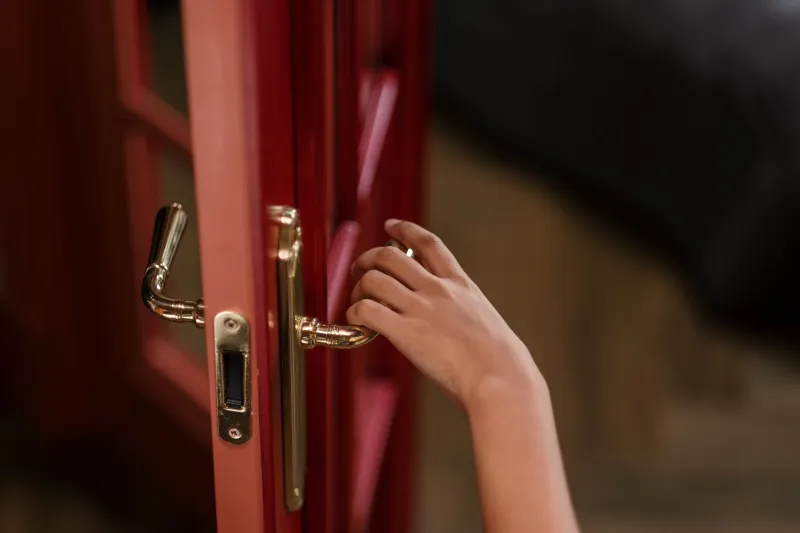
A room can look perfect in a photograph and still feel wrong in the hand. The paint is the right shade of warm white. The sofa has the correct amount of slouch. Then you reach for the door, and the knob sticks, rattles, or turns like it is thinking about it.
We do not usually audit homes this way. We audit them with our eyes: mood boards, listing photos, before-and-after shots. But daily life is not a photo. It is a series of small physical negotiations, and the doorknob is one of the most frequent ones. It is the object your hand meets when you enter a room, leave a room, carry laundry, check on a sleeping kid, or close the door on a noisy street.
The Most-Touched Object Nobody Audits
A doorknob does not get a lot of design attention. It is hardware, not furniture. It is rarely the reason someone rents an apartment or buys a house. Yet it is used dozens of times a day, often without a conscious thought. That is exactly what makes it matter. The most repeated physical interactions in a home set a baseline for how the place feels.
A sticky latch is a tiny tax. A loose knob is a small rattle. A cold metal handle in January is a brief shock. None of these things ruins a day. But they add up into a low-grade friction that you may not notice until it is gone.
The Four-Part Test
Pick one room. Stand at the door and use it the way you normally would. Then run through four quick checks.
Friction. Does the knob turn smoothly? Does the latch release without a shove? Is there a point where you have to jiggle it? Friction is the most obvious sign that something is slightly off.
Sound. Listen for a rattle, a squeak, or a hard click that carries through the room. Sound is tricky because we tune it out. Try opening and closing the door slowly, then at normal speed. A noisy knob is not just annoying; it can make a quiet house feel restless.
Temperature. Touch the knob with the back of your hand. Metal can feel shockingly cold in winter, especially in older homes. In a bathroom or kitchen, condensation can make it slippery. Temperature is part of grip, even if we rarely name it.
Grip. Does your hand fit around it? Can you turn it with wet hands, a full laundry basket, or a child on your hip? A knob that requires a precise pinch is a design problem, not a personal failing. Lever handles are easier for many people, including those with arthritis or limited hand strength.
You can do this audit in about three minutes. Write down what you notice. Do not fix anything yet. The point is to feel the room before you change it.
Why Touch Beats a Mood Board
A mood board shows you how a room will look from one angle. Your hand tells you how it will feel on a random Wednesday. Those are different kinds of information, and the second one is harder to fake.
Touch is also tied to memory. The smooth brass knob on a childhood bedroom door. The loose handle in a rental that required a shoulder. The satisfying weight of a well-made latch. We remember rooms through our bodies more than we admit.
This is not an argument against beauty. It is an argument for a fuller definition of it. A room can be visually calm and physically tense. The doorknob is a good place to start because it is small enough to fix and frequent enough to notice.
Low-Cost Fixes
You do not need to remodel. Most doorknob problems are ordinary hardware issues with ordinary solutions.
- Tighten the screws. A loose knob is often just a loose screw. Use a screwdriver, not a drill on full power, and check both sides of the door.
- Lubricate the latch. A dry or sticky latch can often be helped with a silicone spray or graphite powder. Avoid using cooking oil, which attracts dust.
- Adjust the strike plate. If the door catches or needs a shove, the strike plate may be slightly misaligned. A small file or a screwdriver can sometimes solve it in minutes.
- Add a door silencer. A felt or rubber bumper can soften the sound of a door closing and reduce rattle.
- Swap the knob. If the shape is wrong for your hand, replace it. A larger wooden knob or a lever handle can make a surprising difference. Renters can often swap hardware and keep the original in a bag for move-out.
- Clean and dry. Grit and moisture make hardware worse. A damp cloth and a dry towel are underrated tools.
Start with one door. The one you use most. Then live with it for a week.
A Room You Can Trust With Your Hands
We tend to judge a room by its first impression, which is almost always visual. But the rooms we actually relax in are the ones that cooperate. The door opens without a fight. The handle feels solid. The latch does not announce every exit.
Try the doorknob test in one room this week. You may find that the biggest change is not a new color or a new chair. It is a small piece of hardware that finally stops asking for your attention.